Module 4 Field Activity Reflection
Collaboration:
During the Field Learning Activity (FLA), collaboration with my colleagues played a significant role in shaping and refining the interdisciplinary lesson based on Camille and the Sunflowers. Collaboration took place across multiple stages, including lesson conceptualisation, development, testing, and refinement.
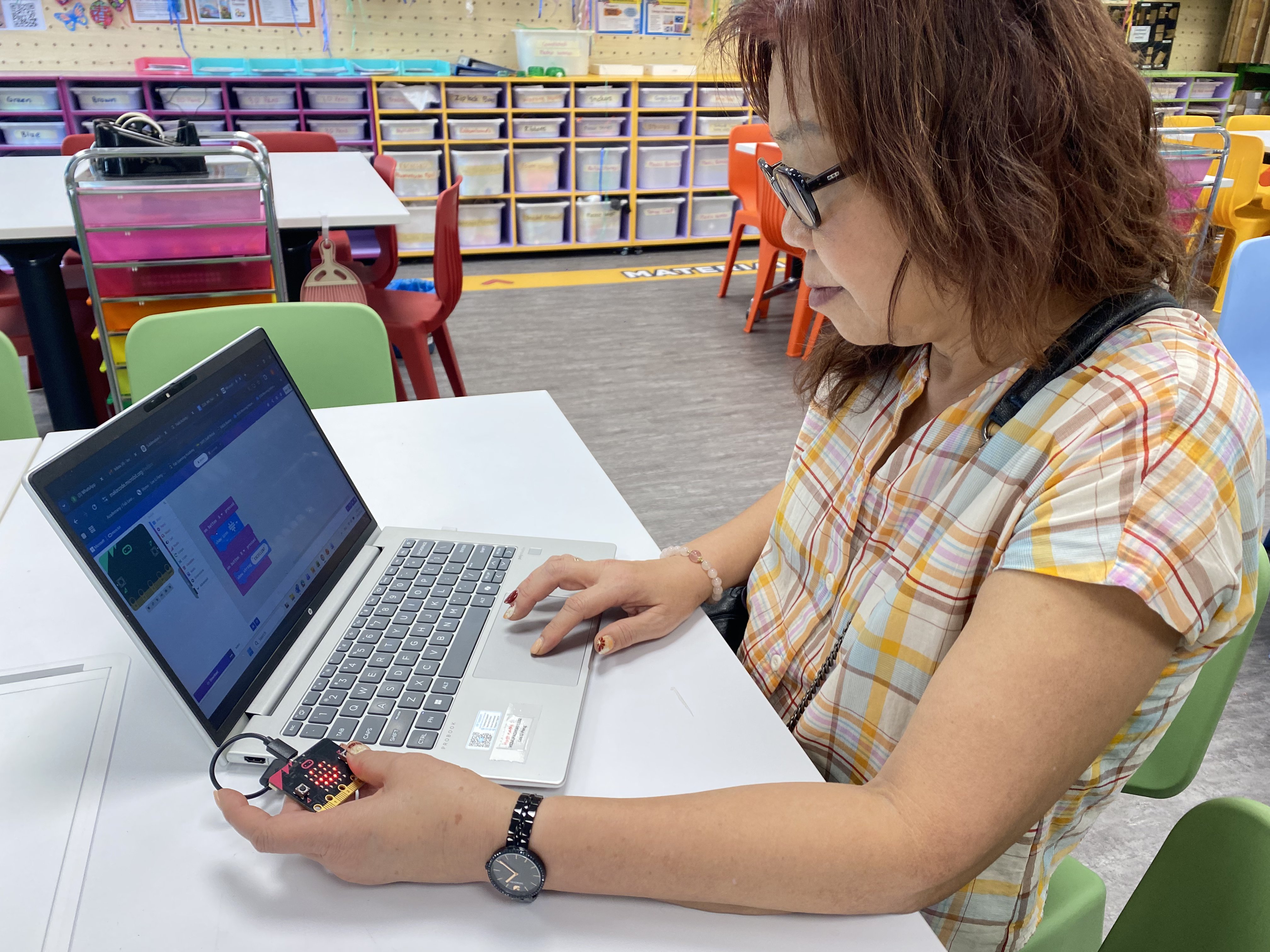
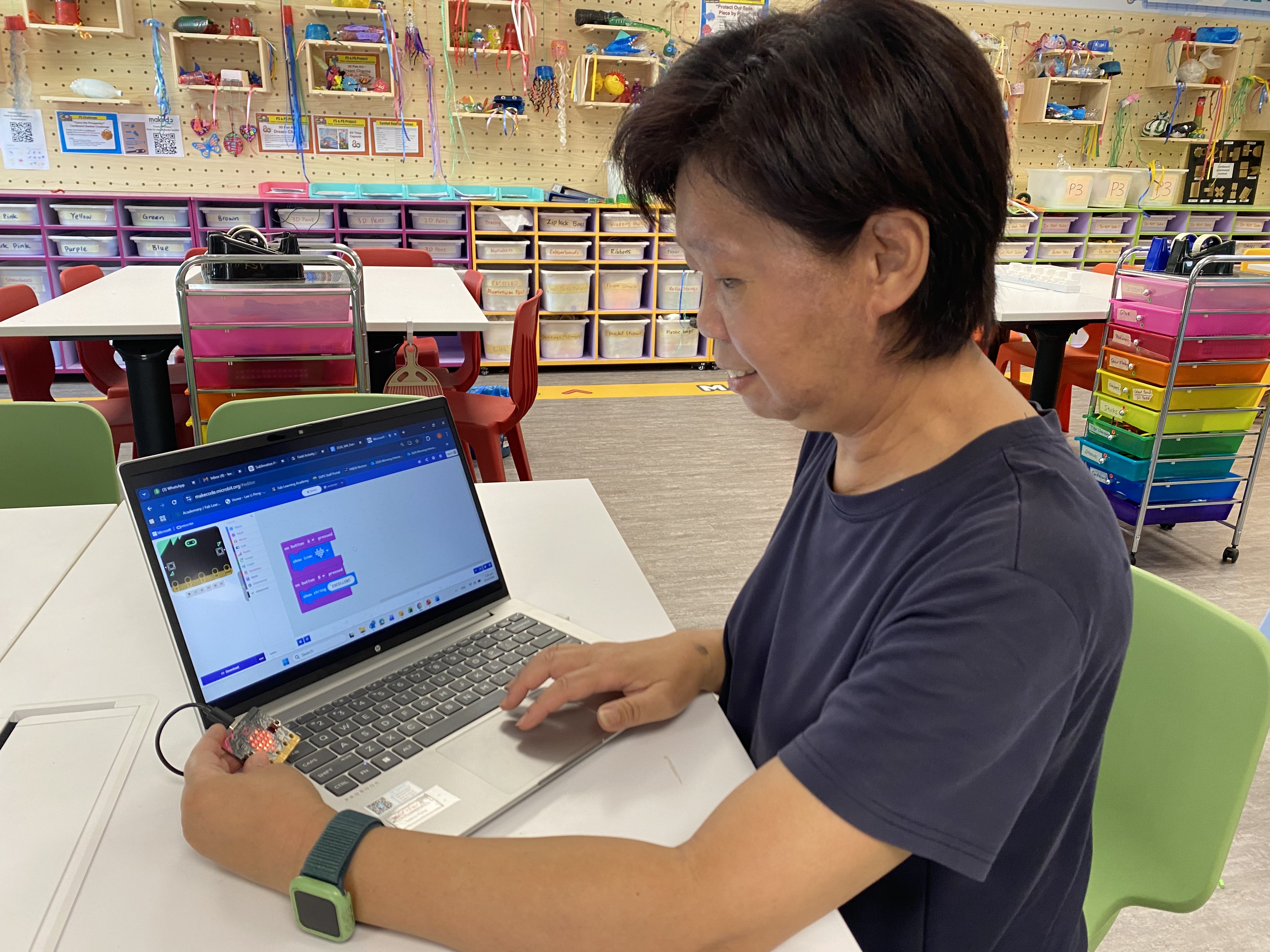
My collaborator, Mdm Li Peng
At the initial planning stage, we worked together to align the lesson objectives across English and Art. While I focused on integrating the STELLAR approach and guiding students’ discussion of characters’ feelings, my collaborator (Li Peng) contributed ideas on how to meaningfully incorporate visual arts inspired by Vincent van Gogh. This ensured that the lesson was not just activity-based, but conceptually connected through the theme of empathy and artistic expression.
During the development stage, my collaborator suggested incorporating digital fabrication for kids, specifically the use of laser-cut sunflower templates. This shifted the lesson from a traditional art activity to a more hands-on and design-oriented experience. Additionally, we proposed integrating physical computing using the BBC micro:bit, which added an interactive dimension to the comprehension component. The idea of using Button A and Button B for “Yes/No” responses helped make students’ thinking visible and encouraged participation from all learners. This supported the main objective of helping students understand how simple programs respond to inputs, making physical computing concepts accessible and meaningful.
At the testing stage, we conducted informal trials of both the micro:bit activity and the art component. My collaborator observed that some students were able to respond quickly using the buttons but needed more scaffolding to explain their reasoning. We provide guiding questions to support students in articulating their thoughts about characters’ feelings and actions.
During the refinement stage, my collaborator also highlighted the importance of explicitly linking the gallery walk to the lesson objectives on kindness and empathy. As a result, I incorporated structured peer feedback prompts, encouraging students to comment not only on the aesthetics of the sunflower artworks but also on the emotions and messages conveyed.
Overall, my collaborator’s perspective broadened my approach to lesson design. Initially, I had focused more on literacy outcomes, but her input helped me see the value of integrating technology and design to deepen engagement and understanding. The emphasis on student interaction, hands-on creation, and visible thinking led to a more holistic and student-centred lesson.
Instructional Challenges:
During the implementation of the interdisciplinary lesson based on Camille and the Sunflowers, several instructional challenges arose across the areas of literacy, art, and physical computing. These challenges required thoughtful adjustments to ensure that all students could access the learning meaningfully.
One key challenge was helping students articulate characters’ feelings with reasons. While many students could identify whether a character felt happy or sad, they found it difficult to justify their answers. I also modelled responses and used think-aloud strategies to demonstrate how to connect events in the story to emotions. This provided scaffolding, especially for students with weaker language skills.
Another challenge was students’ understanding of physical computing concepts using the BBC micro:bit. Although students were enthusiastic about pressing Button A and Button B, some initially saw it as just a game rather than understanding the concept of input and output. To address this, we explicitly taught the idea that pressing a button is an input and the micro:bit’s response is an output.
We reinforced this understanding through scaffolding the administering physical computing concepts of using the BBC micro:bit: 1) Level 1 - pre-programming the code of Button A and B and link to ‘Yes’ and ‘No’. 2) Level 2 - Introducing website: https://makecode.microbit.org and using the pre-programmed code to change the comment of ‘Yes’ and ‘No’ to other positive comments or logo like heart or smiling face. 3) Level 3 (Advanced) - Radio communication
We felt that the differentiated levels help the students understand and reinforce the concept. It allows the high ability learners to explore further.
We were worried that the students might not be able to remember the steps in level 2 well as it involved going to website, importing the AB-button code from thumbdrive, changing the comments, connecting Mico:bit to laptop and pairing it and downloading to mico:bit. In the end, we were surprised as most of them were able to do it.
As for the Level 3, most of the students were able to get to send messages to another group. They were happy to send and receive the messages.
The art component also presented challenges. Some students focused more on decorating their sunflowers rather than applying the stylistic features of Vincent van Gogh, such as bold strokes and expressive colour use. To support them, Li Peng provided visual examples and broke down the style into simple, observable features. I also guided students during the activity with prompts like “How can you show texture?” or “What colours did Van Gogh use?”
Time management was another challenge, as the lesson involved multiple components—reading, discussion, micro:bit interaction, and art creation. Some students required more time to complete their artwork or process the questions. We targeted two sessions of 90 minutes for the art and mico:bit but the students could not do the gallery walk. We had to plan another 90 minutes for the gallery walk and Level 3 (Demo and Hands - on for the advanced students)
To meet the needs of diverse learners, several strategies were incorporated:
Language support: guided questioning helped students who needed more structure in expressing their ideas.
Visual support: Use of illustrations from the story and examples of Van Gogh’s artwork supported visual learners.
Hands-on learning: The laser-cut sunflower activity and micro:bit interaction engaged kinesthetic learners.
Differentiation: More confident students were encouraged to give deeper explanations of feelings, while others focused on basic identification with support.
Peer learning: The art and physical computing and the gallery walk were done in pair. This enables students to learn from one another by observing and giving feedback, promoting inclusion and collaboration.
Overall, while the lesson presented challenges in balancing multiple domains, these were addressed through scaffolding, explicit teaching, and differentiated support. Moving forward, I would refine pacing and incorporate additional supports to further enhance accessibility and deepen students’ understanding across all components.
Integrating Disciplines Reflection
This lesson, based on Camille and the Sunflowers, falls within the interdisciplinary level of the integration continuum. The lesson goes beyond a multidisciplinary approach (where subjects are taught separately) because English, Art, and elements of Physical Computing are intentionally connected through a common theme—kindness and empathy. For example, students explore characters’ feelings in the story (English), express these ideas visually through sunflower artworks inspired by Vincent van Gogh (Art), and respond to questions using the BBC micro:bit (Physical Computing). These components are not isolated; rather, they reinforce one another. Students use the micro:bit to demonstrate comprehension of the story, while the art activity deepens their emotional understanding, making the learning experience cohesive and meaningful.
However, the lesson does not yet reach the transdisciplinary level, as the learning is still largely teacher-directed and anchored within subject-specific outcomes. While there is integration, students are not yet applying their learning to real-world problems or authentic contexts beyond the classroom.
To move the lesson towards a transdisciplinary approach, several enhancements could be made:
**Real-world application:
Students could design and create sunflower-themed artefacts (e.g., cards, displays, or installations) to spread kindness within the school or community, linking their learning to authentic social action.
**Student-driven inquiry:
Instead of only responding to teacher questions, students could generate their own questions about emotions, kindness, or art, and use the micro:bit to design interactive quizzes or surveys.
**Deeper integration of physical computing:
Students could move beyond simple Yes/No inputs to programming more complex responses (e.g., displaying icons, messages, or animations) that represent emotions, strengthening their understanding of input-output systems.
**Cross-context connections:
The lesson could incorporate discussions about how empathy is shown in real life, encouraging students to observe and reflect on acts of kindness in their daily environments.
By incorporating these elements, the lesson would shift from connecting disciplines within the classroom to enabling students to apply their knowledge and skills across contexts, which is a key characteristic of transdisciplinary learning.
Overall, the current lesson demonstrates strong interdisciplinary integration, and with increased emphasis on authentic application and student agency, it can be extended towards a more transdisciplinary learning experience.
AI Usage
AI Usage in the Lesson
Artificial Intelligence (AI) was not the central focus of the lesson based on Camille and the Sunflowers, but it can be meaningfully integrated to enhance both teaching and learning across English, Art, and Physical Computing.
One way AI supported the lesson was in lesson design and resource preparation. AI tools can assist in generating comprehension questions about characters’ feelings, suggest differentiated prompts, and provide sentence starters to support students in expressing empathy and reasoning. This helps ensure that tasks are accessible to diverse learners while maintaining cognitive challenge.
AI can also enhance the English component by helping teachers create personalised learning materials. For example, AI can adapt questions to different language proficiency levels or generate additional scenarios for students to discuss kindness and empathy beyond the story.
In the Art component, AI can be used to generate visual references inspired by the style of Vincent van Gogh. These references can help students better understand artistic elements such as colour, texture, and brushstrokes before applying them to their laser-cut sunflower designs. AI-generated images can also inspire creativity by showing different interpretations of sunflowers.
For physical computing with the BBC micro:bit, AI can support teachers in creating or refining simple programs (e.g., Button A = Yes, Button B = No). It can also suggest extensions, such as displaying icons or messages to represent emotions, helping to deepen students’ understanding of input-output relationships.
Additionally, AI can support reflection and assessment. Teachers can use AI to:
- Generate feedback prompts for the gallery walk
- Analyse common student responses to identify misconceptions
- Suggest follow-up questions to deepen thinking
Overall, AI serves as a supportive tool that enhances planning, differentiation, and creativity. While it does not replace hands-on experiences like digital fabrication or physical computing, it complements them by making learning more adaptive, engaging, and accessible.
Course
This course has significantly influenced the way I approach teaching and learning. Previously, my lessons were more subject-focused, with clear boundaries between disciplines. Through this course, I have shifted towards a more integrated and student-centred approach, where learning experiences connect English, Art, and technology in meaningful ways. For example, in the lesson based on Camille and the Sunflowers, I integrated literacy, visual expression inspired by Vincent van Gogh, and physical computing using the BBC micro:bit. Students were not only learning content but also expressing ideas through making and interaction.
A key shift in my teaching is the stronger emphasis on hands-on learning through digital fabrication for kids. I have incorporated tools such as laser cutting, 3D printing, and basic electronics to create more authentic and engaging learning experiences. For instance, using laser-cut sunflower templates allowed students to explore design and artistic techniques, while also understanding how digital designs can be translated into physical objects. Exposure to 3D printing has helped me see how students can prototype their ideas, while simple electronics and micro:bit activities introduce them to physical computing concepts such as input and output.
This course has also deepened my awareness of sustainability in design. I have started to think more intentionally about material choices, including the potential use of biomaterials, and how to encourage students to be mindful of waste and environmental impact during the making process. This adds an important real-world dimension to digital fabrication, helping students see themselves as responsible creators.
In addition, I have explored block-based coding through Scratch, which provides an accessible entry point for students to understand programming logic. This complements physical computing activities, allowing students to build confidence in sequencing, logic, and interaction before moving into more complex applications.
Moving forward, there are several concepts I would like to explore more deeply. One area is the progression of skills across platforms, such as how students can move from Scratch programming to more advanced physical computing and digital fabrication projects. I am also interested in learning more about design thinking and iterative prototyping, particularly how to guide students in refining their ideas through testing and feedback. Additionally, I would like to deepen my understanding of sustainable design practices, including how biomaterials can be meaningfully incorporated into classroom projects.
To support other teachers in using digital fabrication with their students, I can:
- Share practical lesson ideas and resources, demonstrating how tools like laser cutting, 3D printing, and micro:bit can be integrated into existing subjects.
- Provide simple entry points, such as starting with Scratch programming or basic electronics, to build teacher confidence.
- Conduct hands-on sharing sessions or workshops, allowing teachers to experience the tools and processes firsthand.
- Highlight sustainability practices, encouraging thoughtful use of materials and introducing concepts like biomaterials.
- Promote collaboration, working with colleagues to co-design interdisciplinary lessons and share successful strategies.
Overall, this course has broadened my perspective on teaching, encouraging me to design learning experiences that are more interactive, interdisciplinary, and future-focused. It has also inspired me to support other educators in embracing digital fabrication as a meaningful way to enhance student learning, creativity, and environmental awareness.
Feedback from my collaborator (Li Peng)
It was a meaningful and enriching experience collaborating with my partner on this lesson. She demonstrated strong collaboration and communication skills, contributing actively during planning discussions and remaining open to ideas. Her clear understanding of interdisciplinary learning helped strengthen the connections across English, Art, and Technology, making the lesson more coherent and impactful. She was also supportive and constructive, providing valuable feedback that improved the overall lesson design while keeping a strong focus on student engagement and empathy. Moving forward, there are opportunities to further deepen the integration of technology and incorporate more differentiation strategies to support diverse learners. Overall, her insights and guidance played an important role in shaping this lesson, and I look forward to future collaborations.