Week 6
Assignments
- [ ] Task 1: [Build an interactive story using Scratch]
Process
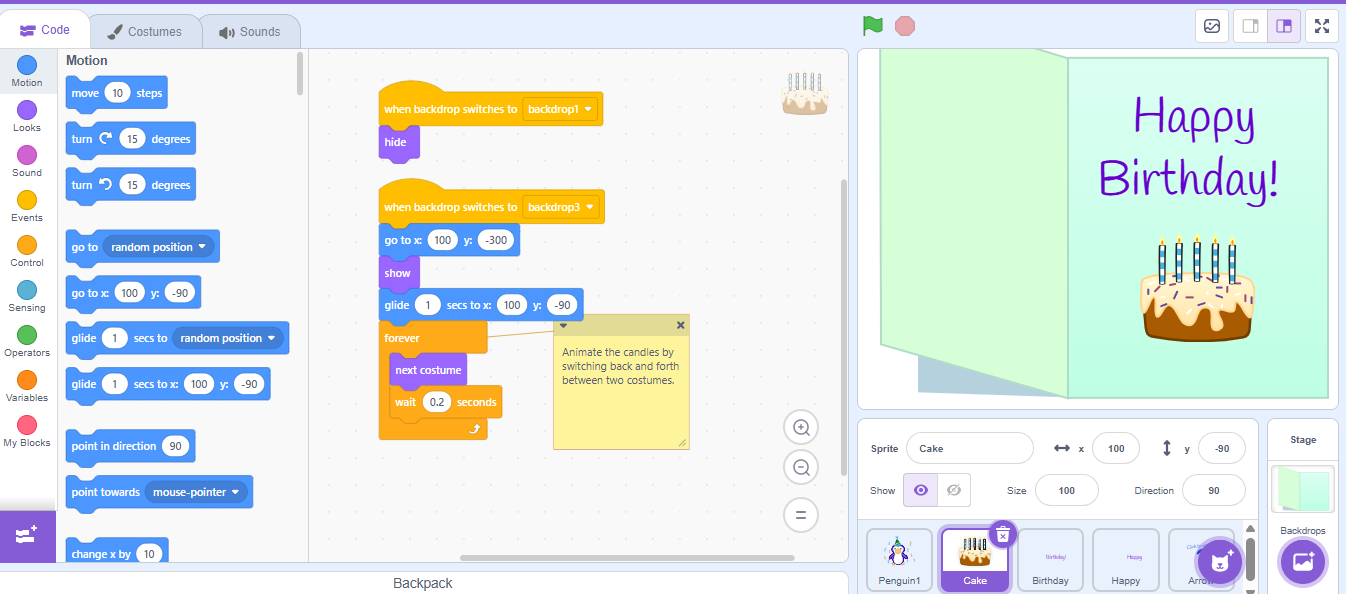
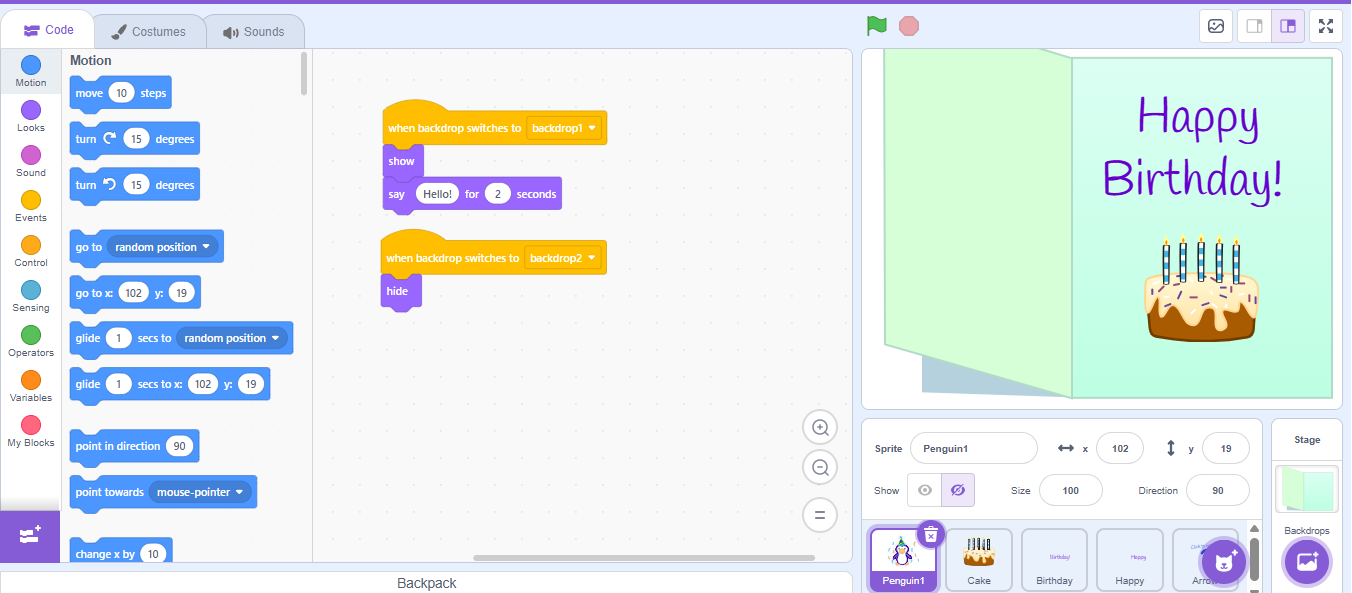
- Steps followed During this task, I worked with my older students, which are from grade 5. They started learning about coding last year so it wasn’t very strange for them. The students were on the process of creating things for their valentine’s day activities which are usually candy grams with a small chocolate. I decided to show them how to create virtual cards using Scratch so they could add it to their activities and send a special message to their teachers. For the creation of the card we used the tutorial that was created by the Scratch team. Part of the things that I teach my students is how to follow and learn things from tutorials so it was a great integration to my usual objectives. https://scratch.mit.edu/projects/11806234
- Photos / screenshots of key stages
- Challenges and solutions
Reflection
- Key learnings: The following questions are part of this week’s reflection tasks.
- When you design a DF learning activity, how do you take into account diversity? Could you describe one learning situation in which you did not take into account diversity in planning? How did you solve the situation?
- In the school where I work, an important part of our mission is having our classes differenciated for our students. I tend to take into account the level of each student has, and the kind of likes that they have. When planning I try to keep in mind that it’s not an activity for me, but for which age, for how many students, for boys or girls and what topics have they talked about recently. But of course, I am a human, and I there are times in which I think an activity will apply to all but it doesn’t. In those cases, I tend to spend more time with the kids that were not included as part of the diferenciation and also use it as an opportunity for the rest of the students to see how we are all different but together we can learn from eachother.
What aspects would you need to take into consideration if you have kids with a) learning disabilities: I believe that in order to include a student with learning disabilities, the most important part is to know the opposite, which are his abilities. Once we focus on the things they are able to do, we can find more ways in which we can teach them. For example, if the student has a hard time reading for dyslexia, then a video in which they explain the instructions might be useful. This video also benefits the rest of the students who prefer learning through audio experiences. b) physical disabilities: A student with physical disabilities is a litte more difficult since the student might need more support from the teacher or even other students. The kids in particular tend to enjoy helping each other so having a partner who can do the things that the other student is not able to do would be helpful for both. c) emotional disabilities: At our school there are professionals who are always there to help students with their emotional learning. The disabilities are always an oportunity to learn so I would take them into consideration also during the lesson. He will be ready to learn when he feels safe, loved and valued. If at the moment, the student is not feeling one of those, it doesn’t matter how much you put into your lesson plan, he will not learn.
Do you think your school is ready to a change in mindset? Why? How can you get support from other stakeholders? I believe that the school is ready for a change of mindset mostly related to the diferenciation of the learning tasks. It has always been a topic to include in our lesson plans. Now, about having programming as part of our tasks, it tends to be a little more difficult since, they do see the importance, but the amount of time that we have the kids is limited, and subjects like math and langage arts are top priority. What are the challenges and opportunities of integrating programming in your classes? One of the main challenges that I face when integrating programming in my classes is having all students be excited about it. Some students tend to see it as “a fun topic to watch other people do” For example I had kids telling me they are interested in hacking but not programming, and having them understand that those are related was a big part of the lesson.
Reflection of Field Activity Digital Fabrication with Kids and Sustainability. - Identify the source of the feedback: learners, colleagues, or AI. – The feedback for this lesson plan was taken from AI. - Describe how you collected the feedback: through observations, written feedback, direct questions, etc. – The feedback was taken by describing a group of students from a different teacher and asking it to give feedback based on those descriptions. Observation and written feedback was used in order to have a more complete feedback set. - What was the specific feedback about how the project aligns with learning goals? How does the assessment align with the learning goals? Does the assessment protocol make sense within the lesson (ie. type of assessment, pacing, difficulty of implementing) – The feedback indicated that the lesson’s learning objectives clearly aligned with the programming and scientific inquiry activities. Students demonstrated the intended skills by creating a reaction-time game, testing it, and analyzing the data they collected. However, it was recommended that the lesson include a learning objective related to sustainability so that students could connect their work to a broader real-world context. The assessment aligns well with the learning goals because each rubric criterion measures a specific objective. The programming and game functionality criterion evaluates students’ coding skills, the data analysis criterion measures their ability to interpret results, and the scientific understanding criterion assesses their knowledge of reaction time. After adding a sustainability objective, I also revised the rubric to include students’ ability to explain how reaction time contributes to health, safety, and well-being. The assessment protocol fits naturally within the lesson because formative feedback is provided during programming and testing, while the completed rubric is used as a summative assessment after students present their projects. The pacing is appropriate, although allowing additional time for debugging and data analysis would improve student learning.
-
What are some changes you made or will make based on the lesson testing and feedback? kills, and create stronger links between programming, science, and sustainabilit –Based on classroom testing and feedback, I made several improvements to the lesson. I added an explicit sustainability objective connected to SDG 3: Good Health and Well-being, revised the assessment rubric to evaluate students’ understanding of sustainability, and explained how the rubric is used throughout the lesson rather than only at the end. I also included estimated timings for each lesson phase to support lesson planning. For future implementations, I plan to provide a debugging checklist, include more examples of real-world applications of reaction time, and dedicate additional time to interpreting the collected data so students can make stronger scientific conclusions.
-
Did you succeed in integrating sustainable goals? Are they included in the learning goals and assessment? Were there any challenges related to the integration?
– Yes, I believe the lesson now successfully integrates sustainability by connecting the study of reaction time to SDG 3: Good Health and Well-being. The sustainability objective is clearly stated in the learning goals, and the assessment rubric includes a criterion that evaluates students’ ability to explain how reaction time relates to safety, injury prevention, and healthier communities. The main challenge was ensuring that sustainability felt like a meaningful part of the lesson rather than an additional topic. To address this, I incorporated real-world examples such as driving safety, sports performance, emergency response, and workplace safety. These examples helped students understand that programming and data analysis can be used to solve problems that improve people’s health and quality of life, making the sustainability connection authentic and relevant.
- Next steps or improvements The next step for my lessons would be having oportunities in which students are able to see the importance of programming. Once they are on board, is easier for admin to see the importance and have more focus on it.
Tools
- Tools or software used
- https://scratch.mit.edu/
- References or tutorials followed
- https://youtu.be/MhglZQK1exo?si=xhuw5ccFmnfEu3Rn
- https://scratch.mit.edu/projects/11806234