Week 7
Assignments
- [ ] Task 1: Design a 3D printable part
- [ ] Task 2: Print a Designed part.
Process
-
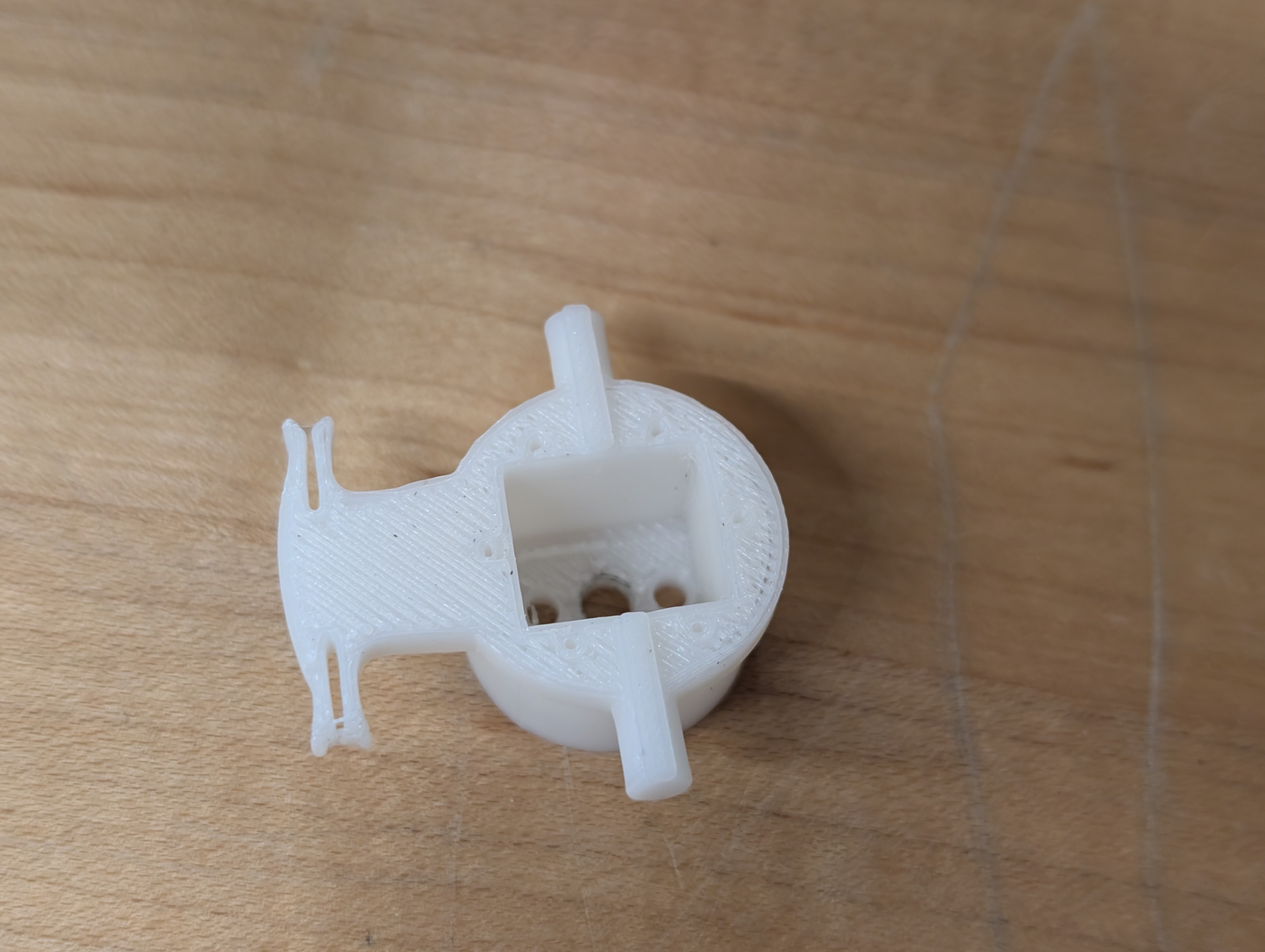
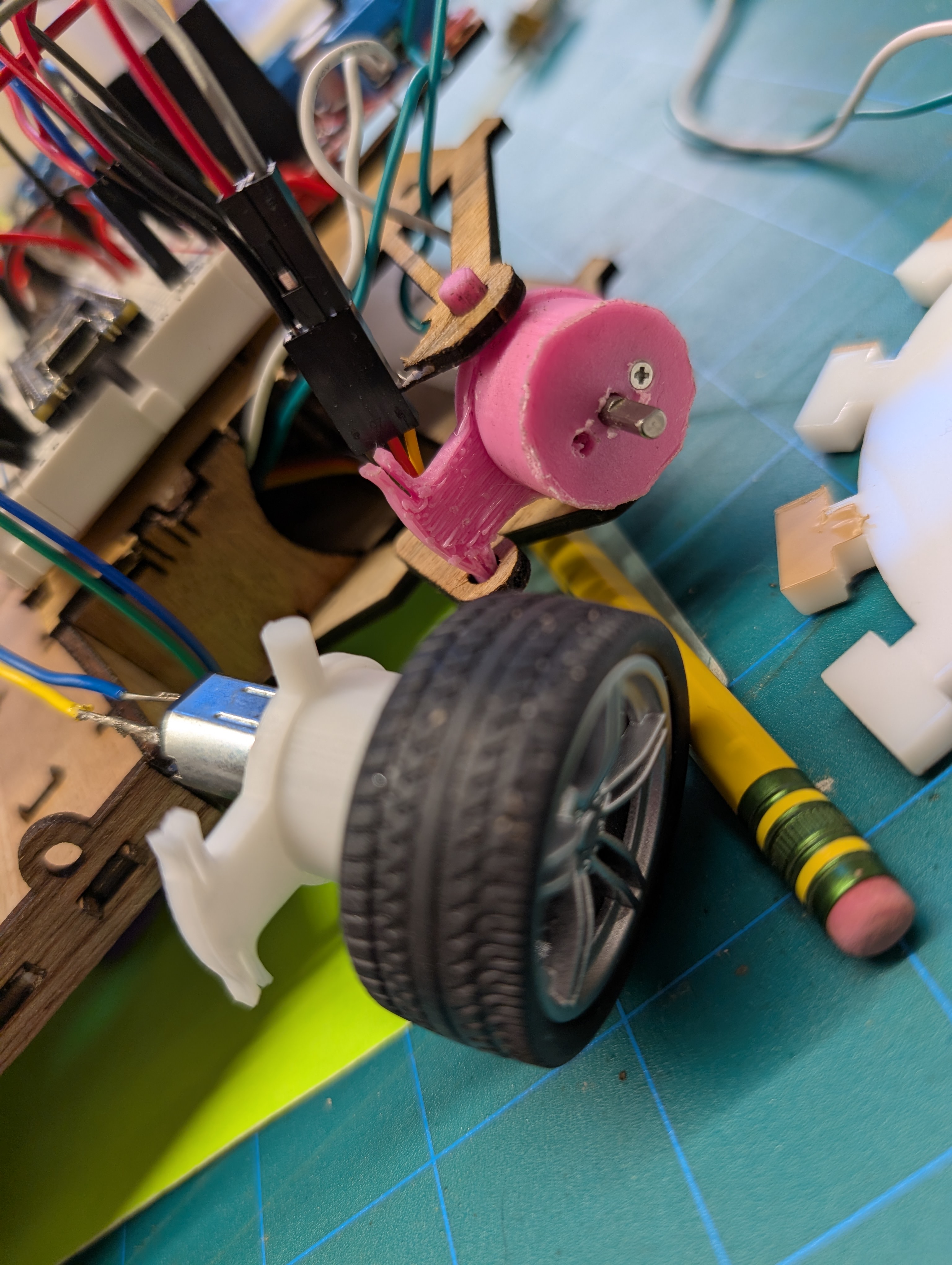
This 3D part is designed from scratch with the goal of fitting within a larger assembly of designed cut parts, as well as a motor and hardware purchased for a larger ongoing project. It is intended to hold a motor and wheel in position determined by a steering linkage attached to a snap-hook based feature protruding from the back of the part. The vertical symmetry in the snaphook feature allows the same part to be printed for both the left and right sides, with orientation dictating the fit, saving the need for variations.
-
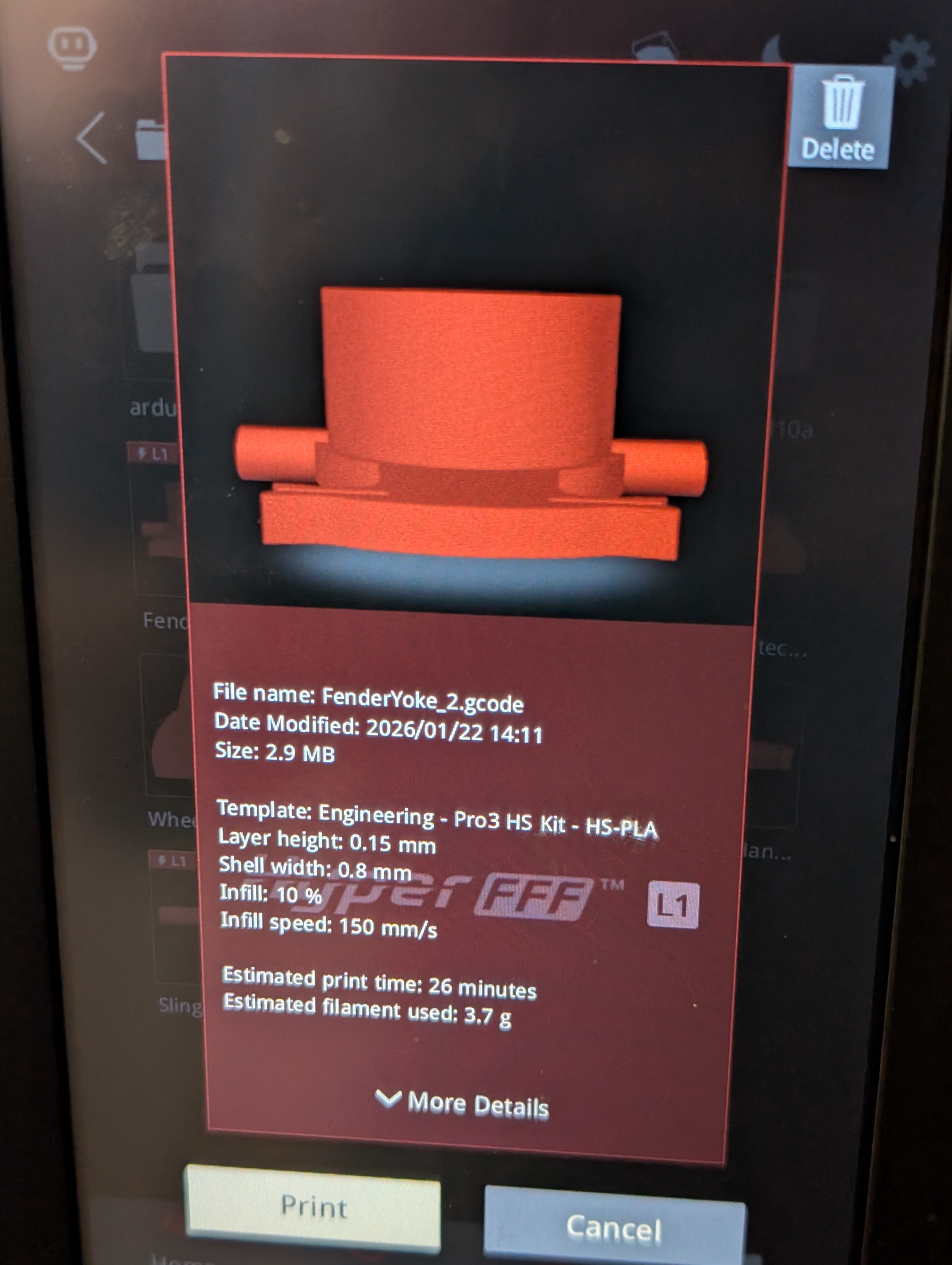
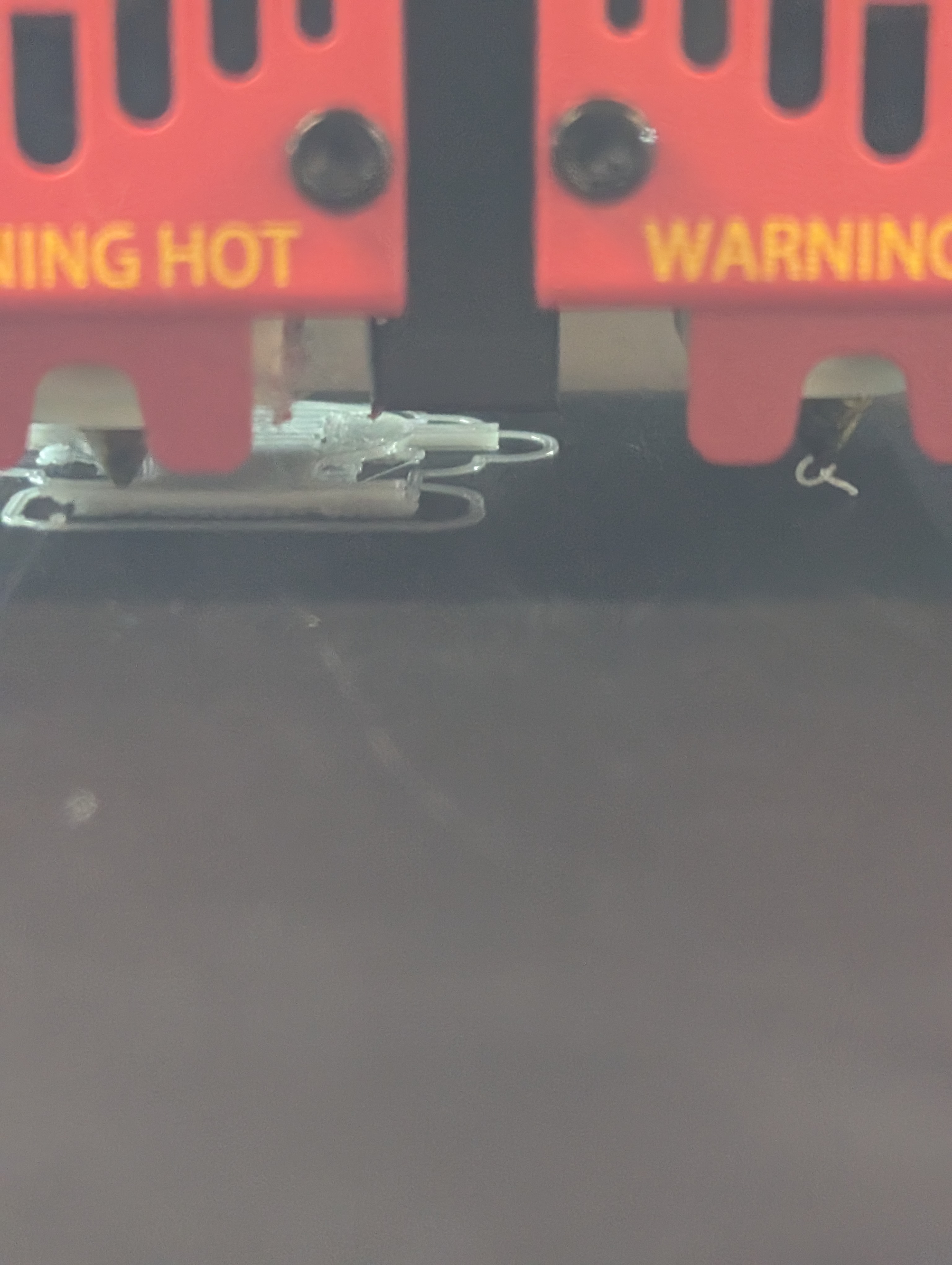
The design was done in Onshape, using Derived features from the purchased motor assembly to drive dimensional values, and the constraints given to ensure it was compatible with the hardware, motion, and other parts around it seemed robust enough to be a challenge, even if it doesn’t incorporate any articulation of its own. It also needed to be printable from two different machines, so as to ensure that enough parts could be made for the entire class within a relatively short time. CAM slicing was done for both the RAISE 3D machine and the older and more numerous FlashForge Creator Pros.
Reflection
The part is intended for a robotic rolling chassis which is intended to mimic the steering drivetrain of the Apollo Lunar Rover.
Other learning activities needn’t be so engineering-forward, and could include things like 4th grade students printing animal adaptation models by assembling shapes out of the Tinkercad libraries. In that case, the students would be focused on the visualization of the adaptations in question, and the tinkercad and print would serve to bolster the connection to the learning in biological science. The challenge there might be to ensure that all those students were able to stay within reasonable size constraints. The alignment seems easy enough, the digi-fab sessions would be well-within convention about making some sort of model of the content from the lesson. The primary challenge would be in making sure the printers were able to print all the files, and that those prints could be adequately matched to the student designers who created them.
I have recently worked with another educator to put together a 5th grade computer science course, and one big challenge is that we could only meet to collaborate at limited times, then during the delivery of the content, she went on maternity leave, becoming considerably less available for further collaboration. Those challenges were mitigated by considerable effort to do as much planning ahead as possible, so that when she left, there was little left to guess about. I would imagine that the likelihood of further complications as more collaborators are added is a big reason why it has been rare for me to even hear about more than two educators directly collaborating on curriculum. Outside of established teams who are already in lock step because they teach the same grade and subject.
Tools
- Onshape
- Raise 3D
- FlashForge Creator Pro.