Week 8
Assignments
- [ ] Task 1: create and cut mold
- [ ] Task 2: Mix and cast a biomaterial part
Process
-
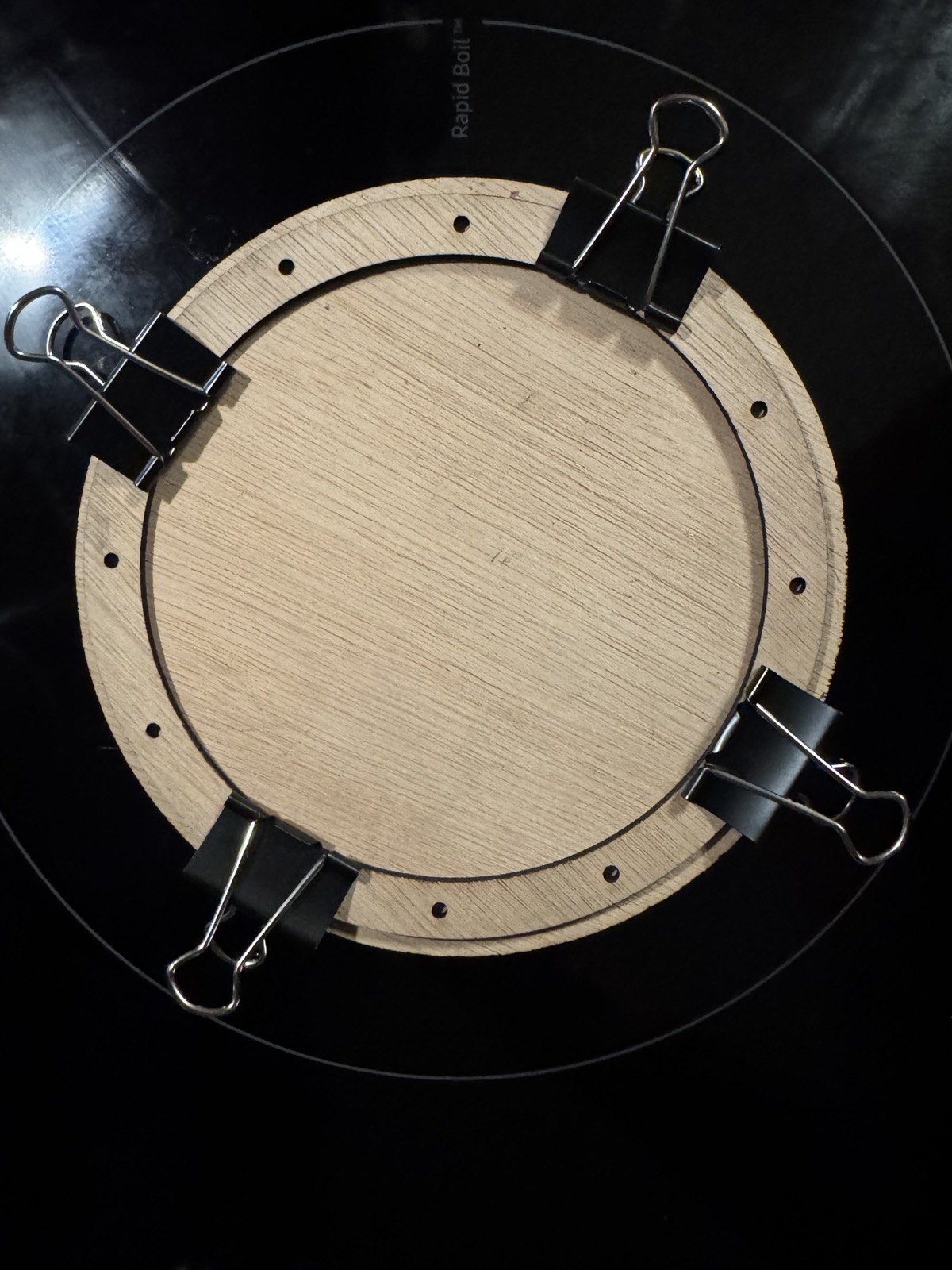
The mold started as a simple concept, circular shape to minimize the risk of things getting stuck in corners, with bolt holes so that I could hold it together tighter than the binder clips. A slight mishap about bolt-hole placement left me with choices about undermining the sustainability of the project by scrapping the cut parts to recut “perfect” ones, or simply embracing the binder-clip method. Yes, I chose efficiency.
-
My Fiancee has been working with a local non-Profit organization to collect oyster shells from local eateries, and refine them into a more sustainable source of lime plaster which can be used as a construction material.
-
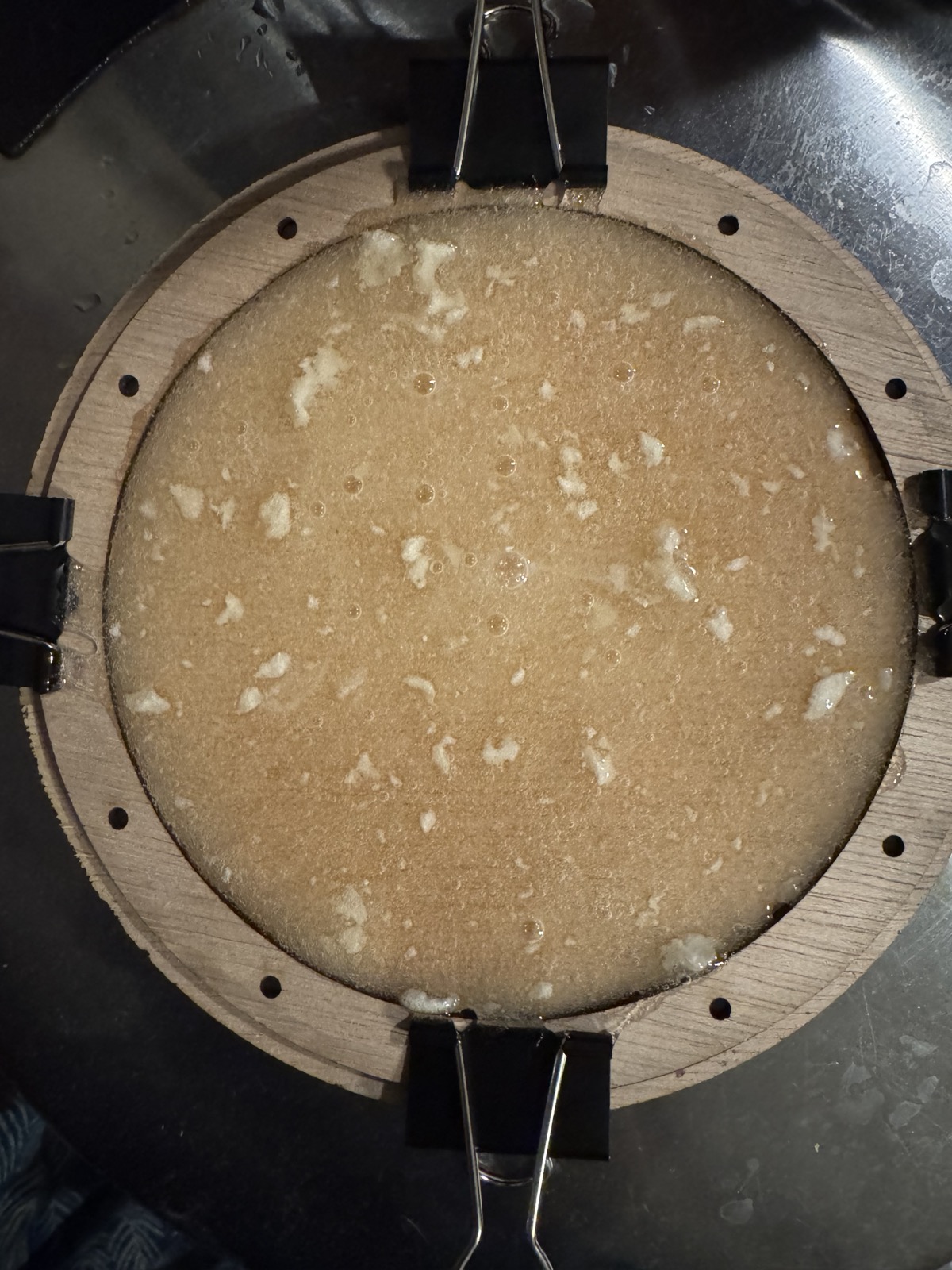
In an effort to pay a tiny homage to that work, I decided to incorporate the resultant powder into my biomaterial mix, as well as omitting the glycerin in hopes of a rigid material that might replace some of the plastic we use in the Lab.
- The plastery mix actually didn’t mix terribly well, and smelled diabolical during the cooking process, which led to finishing the pouring process outside.
Reflection
- Have you considered sustainable practices in your teaching in the pasts? How? What aspects do you think should be improved in your own teaching environment?
- Yes, I have mentioned the desire to reduce the generated waste of alkaline batteries, and more recently I have been trying to reduce the volume of plastic waste generated by successive iterations on parts by our student robotics team. As much as the plastic parts which could be cut for each iteration of the build might be aesthetic AND structurally stable, cutting parts out of wood instead has proven more sustainable because it lowers costs around acquiring more plastic, but also because it reduces the amount of plastic cut at all, saving those for “final iteration” cuts, after students have proven that no more revisions well be needed.
- How Digital Fabrication might support sustainable practices? When using Digital Fabrication what actions you can take to support sustainable practices.
- Digi-fab seems to support sustainable practices by proving less need for mass production of parts which might be outmoded before the entire stock can be sold. Beyond that, taking agency of crafting one’s own bespoke parts allows further efficiency in selection of materials incorporated, as well as the capacity to make design choices which further reduce waste, such as choosing part orientations which maximize usage of sheetstock, such that minimal of it is wasted.
-
How could you integrate both culturally reflective learning and digital fabrication in your environment? Could you come up with some project ideas using digital fabrication in which cultural diversity of students is highlighted?
-
The cultural landmark of family-operated oyster fishing is a big deal in southern Louisiana, and creating opportunities for students to learn from traditional practices, while getting a lesson in a sustainable resource for crafting and construction alike seems a harmonious way to do so.
-
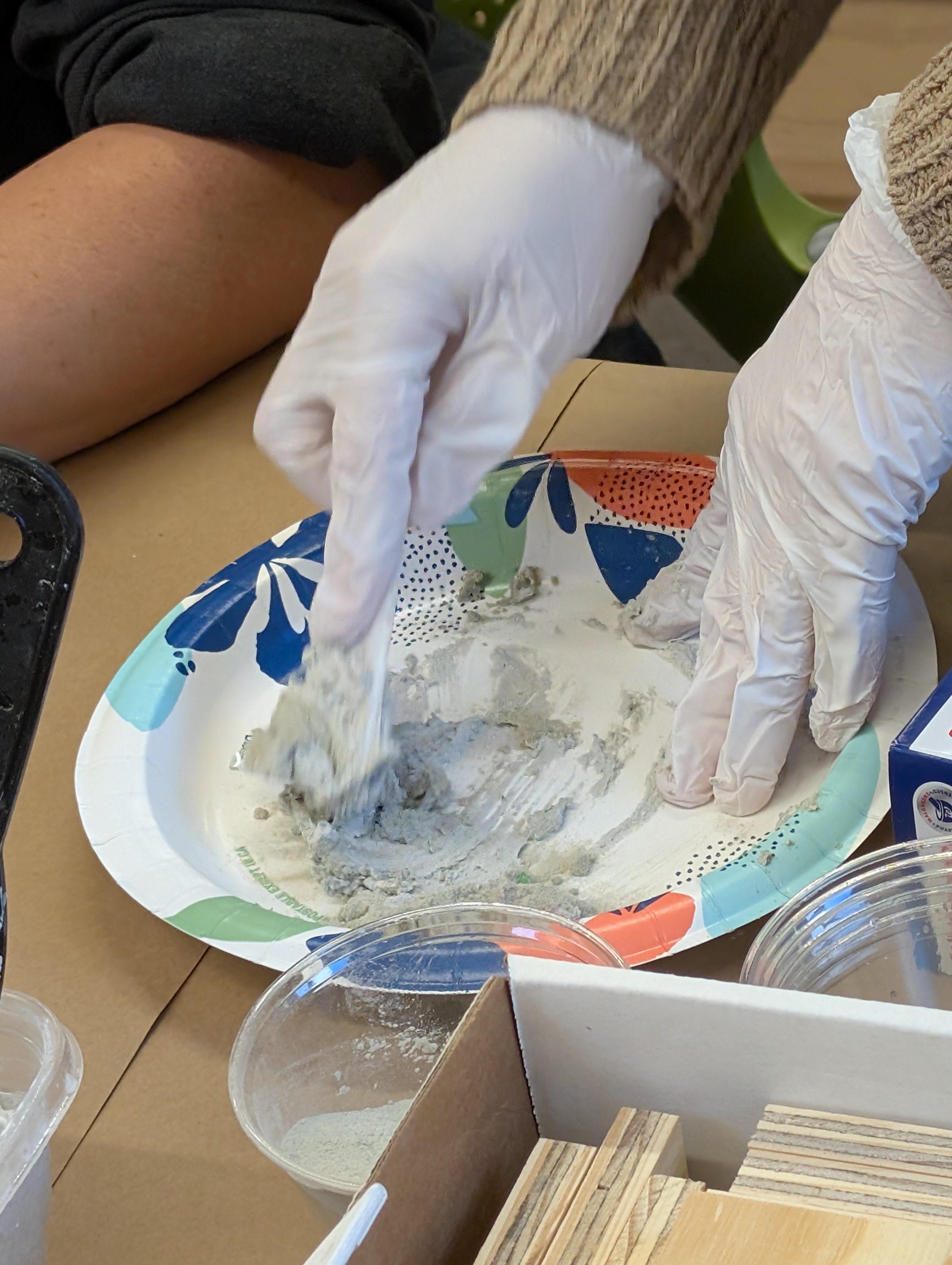
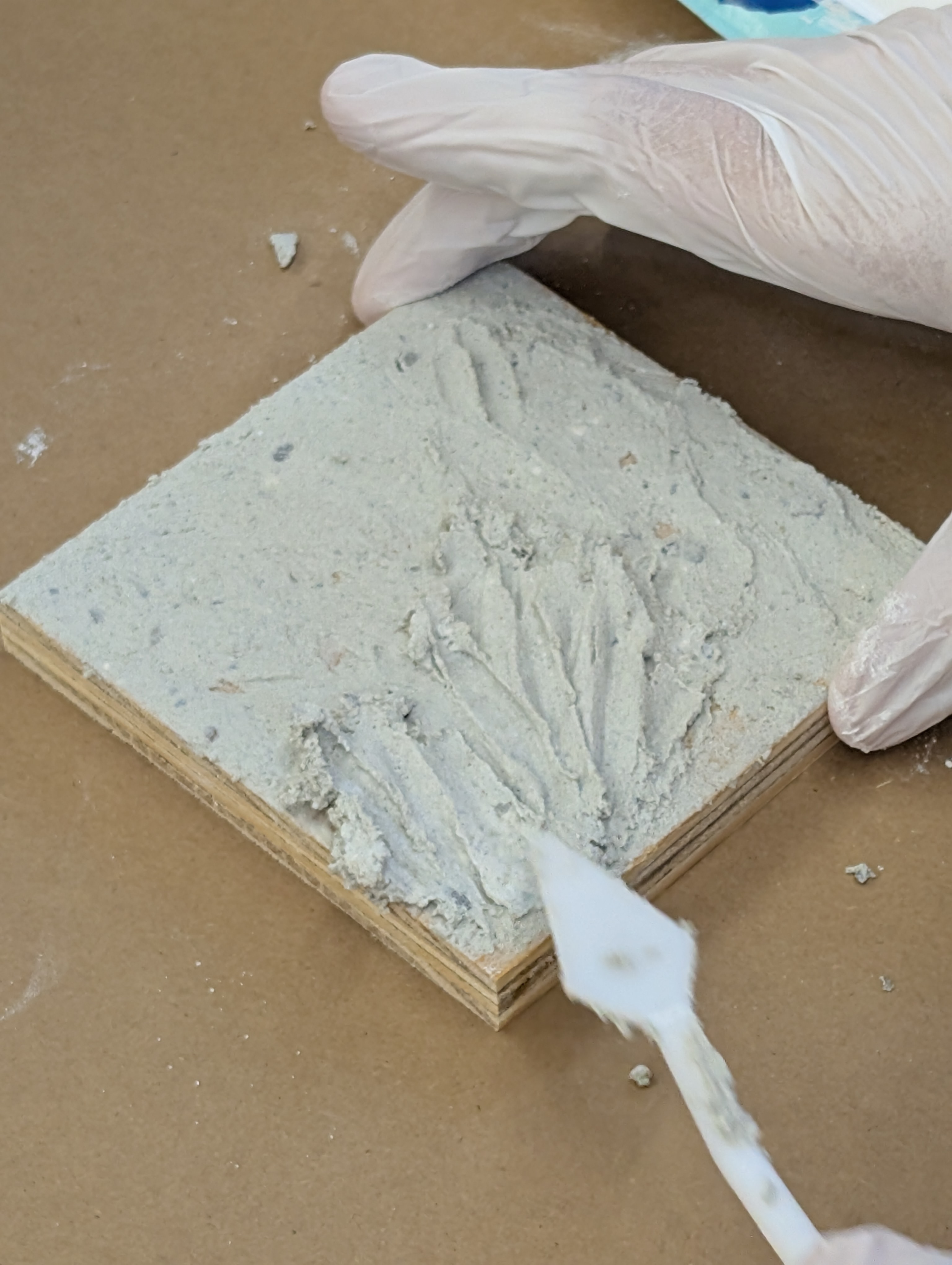
Alas, many young folks have not yet acquired a taste for eating oysters themselves, so the excitement about using the shells for anything so bold was perhaps a little lost on them. But we were able to try some small craft ideas at a community event, allowing for some simple sculpting.
-
Tools
- Adobe Illustrator
- Epilog Helix
- electric stove and food scale