Field Activity 2
This week I created a prototype of a simple electronic Christmas toy.
Process
- I chose the type of toy.
-
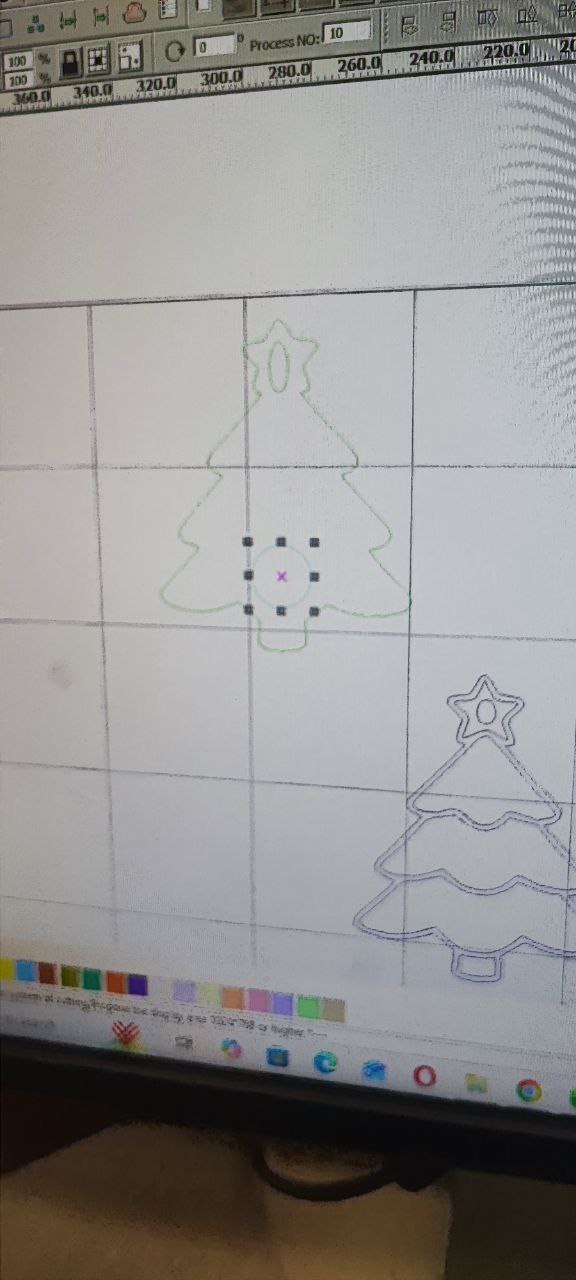
I received the corresponding SVG file and cut out the image on felt and cardboard.
-
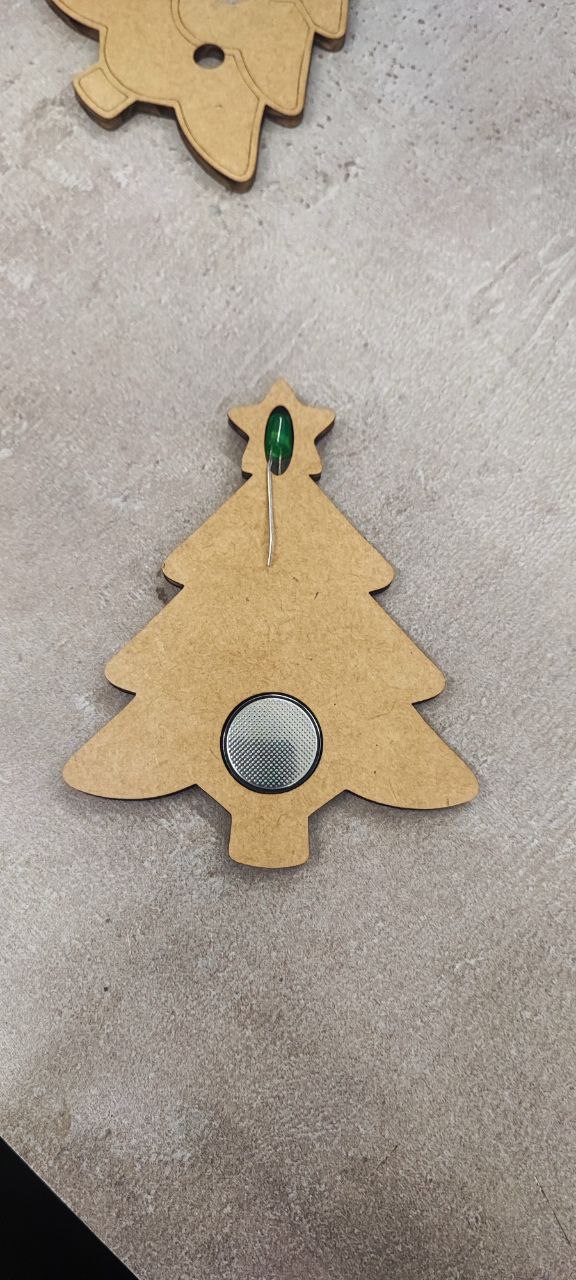
I also cut holes for the battery and light bulb on the cardboard. I made a button to close the circuit from an extra piece of felt.
-
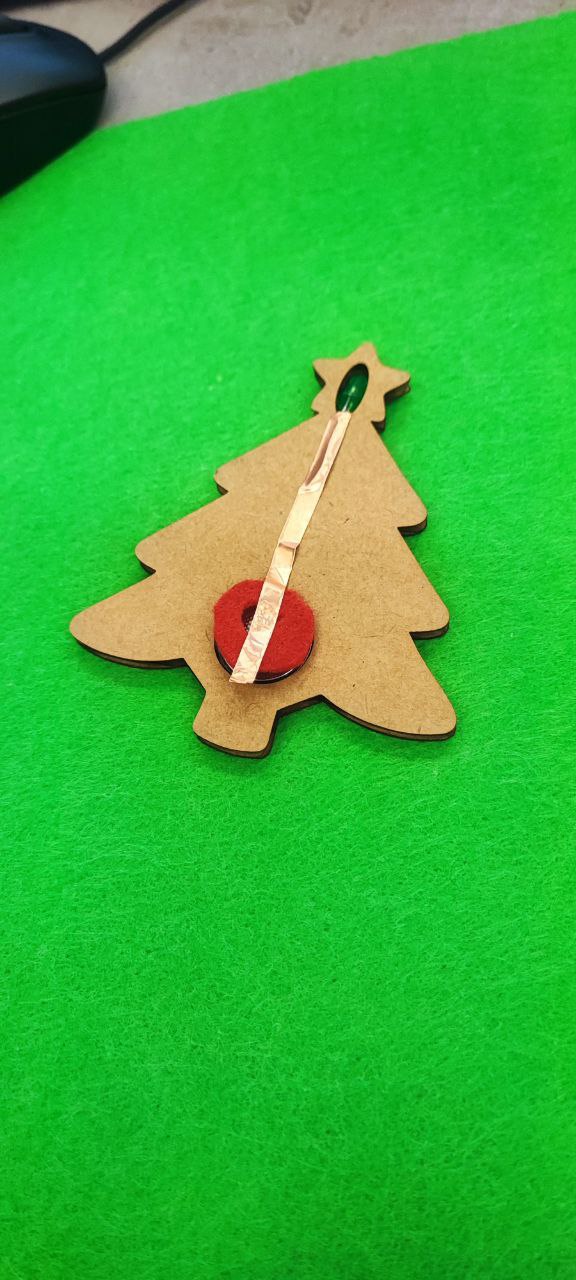
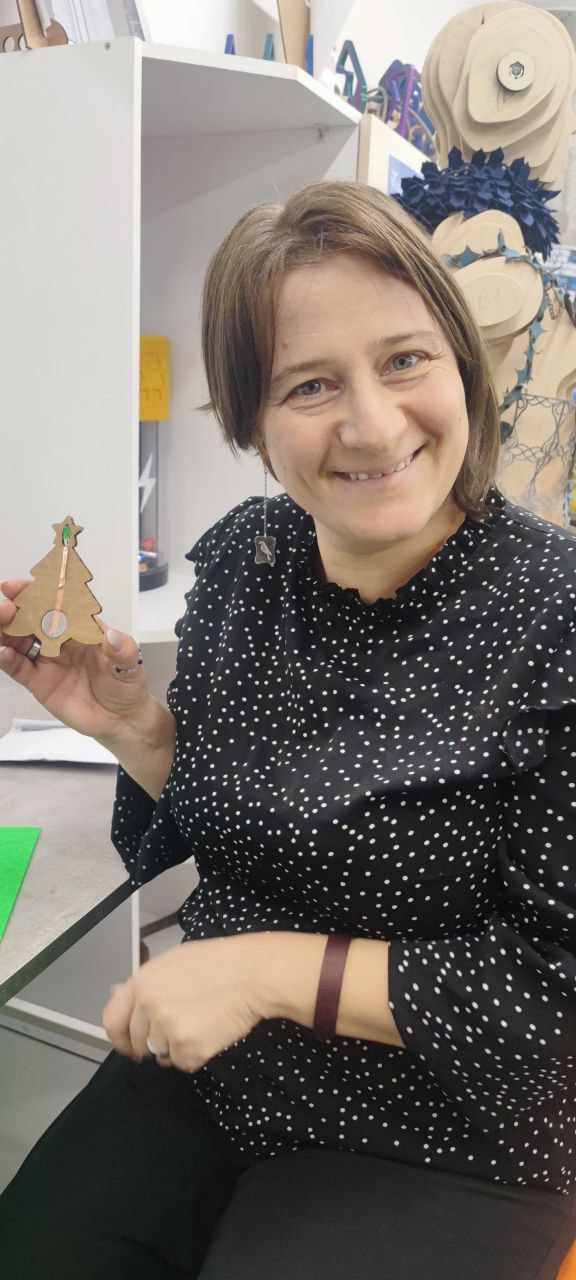
I assembled the circuit.
-
After this, I made a similar toy together with 6th graders.
I wrote the lesson plan This the link of ScopeDF lesson
Learning objectives After this lesson students will: - Know the basic safety rules for working with electricity - Construct a complete simple circuit, ensuring that the anode (+) and cathode (-) of the LED are correctly aligned with the battery terminals.of an electrical circuit - Have a basic understanding of how an electrical circuit works - Demonstrate how to use vector software to create “cut” lines and “engrave” lines - Analyze the conductivity of different materials (copper tape, wire, or conductive ink) to determine the best method for the specific gift design
Reflection
1.How well did the activity align with your intended curriculum or standards, and what adjustments (if any) would strengthen this alignment? The lesson met the educational standards and the curriculum, as the students had some knowledge in the field of science. The topic was well chosen because a fair is planned for the New Year, where these toys will be sold. On the other hand, the social learning component helped them understand what the final product would be in the end. And the participation in the New Year’s fair inspired the students when they presented difficulties. But they had some difficulties in understanding how chains work in life. Therefore, I had to explain to them using some analogies from life. For example, a comparison of electric current with a stream of water and a bridge helped them understand the principle. In the future, I would apply this lesson to older students, for example, seventh graders who take Physics at school. Perhaps in this case, as a complication of the task, it would be possible to increase the number of lamps and make a task for serial and parallel connection of led lamps.
This activity fits into the Science 6, Physics 9, and Physics 10 curriculum. The curriculum includes a section on simple electrical circuits, and I think a teacher for these subjects could use this lesson.
-
Armenian Physics 9 and Physics 10
-
Armenian Sciesce 6 standarts & curriculum
2.In what ways did students’ ZPD guide your decisions about pacing, scaffolding, or complexity of the activity?
ZPD guide decisions in the following way. When knowledge in the field of electronics, which they acquired in advance, was used, I only guided their actions. But with laser cutting, I had to help them more activelly.
The pacing of my lesson could be improved based on the ZPD by taking the following steps:
-
Start with simpler tasks and then move on to more complex ones.
-
Explain the principle of work or divide the task into subtasks, for example.
-
Continuously ask students what we are doing and why, which will allow them to systematize their steps and make fewer mistakes.
-
Take into account the fact that students’ abilities and knowledge vary and allow them to share their experiences with each other.
3. What supports did you provide in the lesson plan to support diverse student needs? How did these supports work in the overall lesson?
They needed help with laser cutting and my direction as a mentor, because the students had never worked with laser cutting before. Laser cutting was a new activity for them, so they needed my help.
They also needed help with files. Some difficulties in creating the file could be overcome by using Inskape, as it’s a more familiar program from the computer science course.
The students felt more engaged during the electrical circuit assembly process because the topic was familiar to them from science. In the field of making toy and assembling an electric circuit, the knowledge obtained up to this point helped them solve problems themselves.
4. After testing the lesson, what changes would you make to better meet diverse learner needs or to better maintain the learning objectives?
Perhaps in the future it will be possible to add more simple tasks to Corel and Inskcape. For example, draw a small round or oval area and cut it on cardboard. maybe it’s worth diversifying the shapes of the toys as well as complicating it by adding laser ingraving.
I think to improve engagement in the future, I could create a working group of students for whom these skills are not new. They would be able to help their classmates. This would also solve problems related to the ZPD.
Assesments
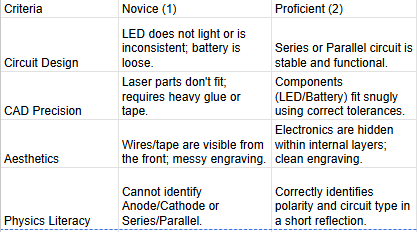
For evaluate students we can use this rubric
Tools
- Felt
- Cardboard
- Led bulb
- 3v battery
-
Copper tape